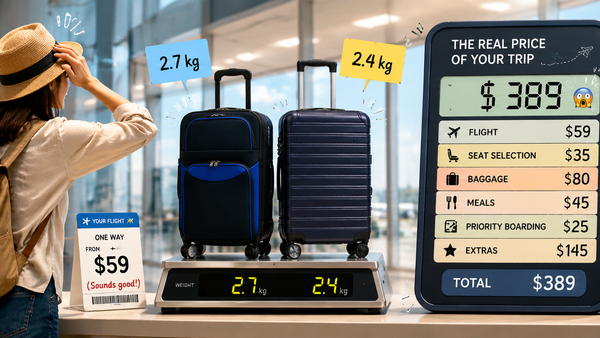
A cheap flight can look like a bargain when you first see the price on your screen. But these days, the number that catches your eye at the beginning of the booking process may not be the number you eventually pay. Seat selection, meals, checked baggage, priority boarding and even the right to put a larger cabin bag in the overhead locker can all come at an additional cost. For travellers, this means the smarter question is no longer simply “How much is the flight?”, but “How much will my entire journey actually cost?”
This is becoming particularly relevant as Southeast Asia's budget airlines deal with higher operating costs. Reuters reported this week that carriers including AirAsia, Scoot and Cebu Pacific are still feeling the effects of the severe fuel-price shock, with higher fuel and leasing costs putting pressure on their finances. Low-cost carriers face a particularly difficult balancing act because their passengers are highly price-sensitive, making it difficult to simply pass every increase on through the base airfare.
Jetstar's new cabin-bag charge: a sign of things to come?
One of the clearest examples is Jetstar's planned change to its carry-on baggage policy. From 2 February 2027, Jetstar plans to move away from its current 7kg carry-on weight limit and introduce a new size-based model. Passengers who want to place a larger cabin bag in the overhead locker will need to purchase its Priority Carry-on option. Reported fees range from A$25 to A$52 per flight, depending on the route. A smaller personal item that fits under the seat in front of you will remain free.
In other words, the days of thinking “I bought a cabin-sized suitcase, therefore I can bring it onboard for free” are becoming less straightforward. The suitcase may fit the airline's dimensions perfectly, but that does not necessarily mean the overhead locker space is included in your fare. Jetstar's current baggage information also makes clear that its existing Starter fare allowance applies to flights before 2 February 2027, with two carry-on items sharing a 7kg limit.
This is part of a wider trend in low-cost aviation known as unbundling. Instead of putting everything into one higher ticket price, airlines can advertise a lower base fare and allow passengers to pay only for the extras they want. For someone travelling with nothing more than a small backpack, this can make perfect sense. But for someone travelling with a suitcase, choosing a seat and checking a bag, the final price can look very different from the headline fare. Jetstar's new approach has already prompted debate about whether low-cost flying is still as cheap once the necessary extras are added.
So, should you stop flying budget airlines?
Not at all.
Budget airlines can still offer excellent value, particularly for short trips where you can genuinely travel light. The trick is to understand what you're buying.
If you're going away for three or four days and can fit everything you need into a small under-seat bag, a low-cost fare can remain very attractive. But if you're travelling for two weeks, bringing shopping home, travelling with children or simply prefer having a proper cabin suitcase, you need to calculate the total cost before deciding which airline offers the better deal.
This is where your luggage choice becomes surprisingly important.
The suitcase itself can affect your travel cost
Imagine two cabin-sized suitcases. Both meet the airline's permitted dimensions, but one weighs 3.5kg empty while the other weighs 2.4kg.
If your airline imposes a strict weight allowance, that difference is significant. With the heavier suitcase, more of your permitted baggage weight is already being used before you've packed a single shirt.
A lightweight suitcase isn't just easier to lift into an overhead compartment. It gives you more of your baggage allowance for the things you actually want to bring.
This is something we pay particular attention to when selecting luggage at Luggage Outlet. For example, our recently restocked 20-inch Stalwart softside fabric luggage weighs 2.7kg, while our 20-inch Petite ABS hardcase comes in at about 2.4kg.
That's a difference of roughly 300g before you've packed anything. It may not sound like much, but when an airline's baggage allowance is tight, every gram starts to matter. And when you're trying to avoid paying an additional baggage fee just to bring the things you need, those grams can add up.
The two also demonstrate an important point: lightweight doesn't have to mean one particular type of luggage. A softside fabric case can offer flexibility and expansion, while a hardcase can provide a more rigid protective shell. The right choice depends on how and where you travel.
So when comparing luggage, don't look only at the number of inches or the amount of storage space. Look at the weight of the suitcase itself.
Don't buy luggage by size alone
A suitcase labelled “20-inch” doesn't automatically tell you everything you need to know. You should also consider its actual external dimensions, empty weight, usable interior space and, most importantly, the baggage rules of the airline you're flying with.
For example, two suitcases can both be marketed as 20-inch cabin cases but have noticeably different empty weights. That difference comes directly out of the baggage allowance you have available for your clothes, electronics and other essentials.
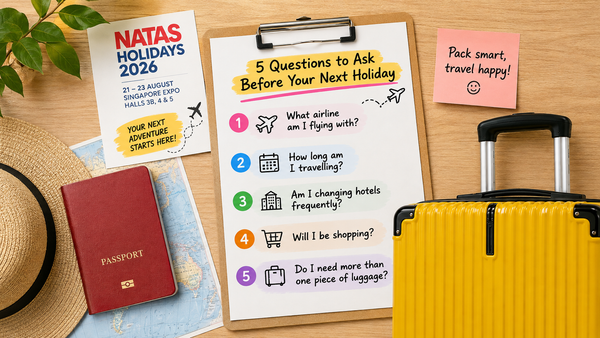
So before buying, check:
✔ Airline baggage dimensions
✔ Weight allowance
✔ Whether cabin baggage is included in your fare
✔ Whether an overhead bag requires an additional fee
✔ Whether wheels and handles are included in the stated dimensions
**✔ How much the suitcase weighs when empty
That last number is easy to overlook, but with airlines increasingly charging separately for baggage and overhead locker access, it may be one of the most useful numbers on the luggage specification sheet.
The cheapest flight isn't always the cheapest journey
There is nothing wrong with choosing a budget airline. In fact, for many travellers, it can be the smartest choice.
But don't compare airlines using the headline fare alone.
If Airline A costs $80 but you need to add baggage, a seat, meals and other essentials, while Airline B costs $120 and already includes some of those items, the second flight may actually be better value.
The same principle applies to luggage.
A cheap suitcase that is heavy, difficult to manoeuvre or poorly suited to your airline's baggage rules may end up costing you more in convenience, excess baggage or replacement costs later.
As airlines continue to separate the cost of the flight from the services around it, knowing your baggage rules is becoming part of being a savvy traveller.
So the next time you see a tempting $49 flight deal, don't just ask:
“How much is the ticket?”
Ask:
“How much will it cost me to take everything I actually need?”
Because in the world of budget travel, the cheapest flight isn't necessarily the cheapest trip. And sometimes, the suitcase you're carrying can make more difference to the final bill than you think. 🧳✈️
Airline baggage policies and fees can change. Always check the latest rules and charges directly with your airline before booking and before travelling.