Packing for a trip usually starts with an innocent question: “How much can I fit into this suitcase?” But there is another question travellers should ask before zipping up: “Am I actually allowed to bring all of these?” Airport security and customs regulations can turn an ordinary suitcase into an unexpected conversation with an officer. From liquids and batteries to oversized luggage and even certain food items, what you pack can affect how smoothly your journey begins. Here are 8 common luggage mistakes that could get you stopped, delayed or sent for additional screening at the airport.
1. Overweight luggage ⚖️
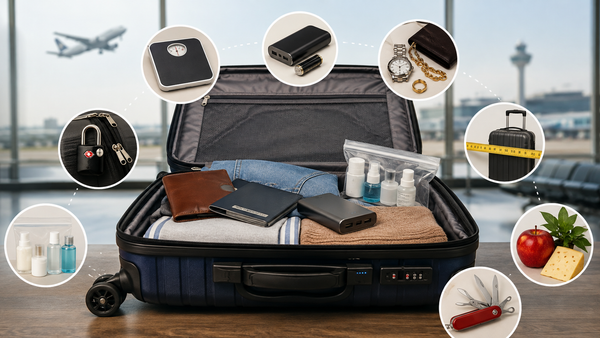
That extra pair of shoes might seem harmless, but your airline's baggage scale may have a different opinion. Checked baggage allowances vary by airline, fare type and destination, and exceeding the permitted weight can mean paying an excess baggage fee or, in some cases, repacking your suitcase at the check-in counter. Before leaving home, check your airline's exact baggage allowance and weigh your luggage if you can. A few minutes with a luggage scale can save you from unpacking your suitcase in front of a queue of impatient travellers.
2. Power banks and spare batteries 🔋
Power banks are travel essentials for many of us, but they are also among the items that need special attention. Spare lithium batteries and power banks generally need to be carried in your cabin baggage rather than checked luggage, because of the fire risk associated with lithium batteries. There are also limits on battery capacity and quantity, depending on the airline and applicable regulations. And if your carry-on bag is unexpectedly taken at the gate and placed in the aircraft's hold, remember to remove your power bank and spare batteries first. For travellers flying within China, power banks are strictly required to have a clear CCC certification label.
3. Valuables in checked luggage 💍
Your checked suitcase may travel hundreds or even thousands of kilometres away from you, so it is not the ideal place for passports, cash, jewellery, expensive electronics or other irreplaceable belongings. Airlines and travel authorities may also have specific restrictions or liability limitations concerning valuable items placed in checked baggage. Keep important documents, valuables and things you absolutely cannot afford to lose in your cabin bag whenever possible. Your suitcase might have a sturdy lock, but it is still travelling out of your sight.
4. Unlocked or poorly secured luggage 🔐
A suitcase that is difficult to open is inconvenient. A suitcase that opens accidentally during transit is a full-blown luggage disaster. Broken zippers, overstuffed compartments and poorly secured bags can result in belongings falling out or the bag being opened during inspection. If you're travelling to or through the United States, remember that security agencies may inspect checked baggage, so using an appropriate TSA-approved lock can make the process easier without compromising the security inspection. Most importantly, don't overpack your suitcase to the point where the zippers are fighting for their lives. You can get your luggage with TSA locks here.
5. Oversized cabin bags 📏
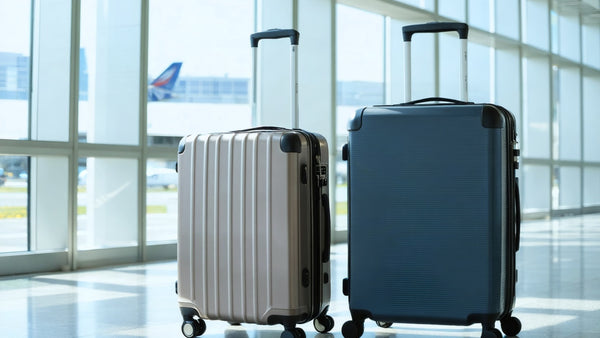
“It's only a little bigger” is not necessarily a convincing argument at the boarding gate. Cabin baggage dimensions and weight limits differ between airlines, and some carriers have become increasingly strict about checking bags against their allowances. A suitcase that fits perfectly in one airline's overhead compartment may be considered oversized by another. Before flying, check your airline's current cabin baggage dimensions and weight limit, especially if you're travelling on a budget carrier, you can check them here.
6. Liquids, gels and aerosols 🧴
The classic airport headache remains very much alive. Shampoo, sunscreen, perfume, toothpaste, creams, sauces and other liquids or gels can be subject to restrictions in cabin baggage. Many airports follow the familiar 100ml container limit, although screening rules can vary depending on the airport and the latest security procedures. If you are unsure, check the requirements of your departure airport before packing. Better yet, keep your toiletries organised and easily accessible so you are not performing an impromptu suitcase excavation at security.
7. Food, plants and other restricted items 🍎🌱
That local snack you bought as a souvenir may be perfectly legal to carry out of one country but restricted when you enter another. The same applies to meat, fresh produce, seeds, plants, flowers and other agricultural products. This is where customs and airport security become two different questions. An item may be permitted through the security checkpoint but prohibited or subject to declaration when you arrive at your destination. When travelling internationally, always check your destination country's customs and agricultural rules before packing food or biological products, destinations such as Australia have strict biosecurity measures.
8. Items you simply didn't realise were prohibited 🚫
And finally, there is the category responsible for many airport surprises: “I didn't know I couldn't bring that.” Sharp objects, flammable materials, certain tools, chemicals and other potentially dangerous items can be restricted or prohibited, particularly in cabin baggage. Even everyday objects can have different rules depending on whether they are packed in your carry-on or checked suitcase. If there is any doubt about an item, don't rely on what you remember from your last trip. Check the official rules for your airline, departure airport and destination.
Pack smart, travel smoother ✈️
Your suitcase is more than just a container for clothes. What goes inside can determine whether you breeze through the airport or end up repacking your belongings at security. Before every trip, take a few minutes to check your airline's baggage allowance, airport security requirements and destination customs regulations. Rules can change, and what is permitted on one journey may not necessarily be permitted on another.
So before you close that suitcase, run through the eight checks: weight, batteries, valuables, security, size, liquids, restricted food or plants, and prohibited items. A little preparation can prevent a lot of airport drama. After all, the ideal luggage experience is one where your suitcase gets checked in, comes out at baggage claim and never becomes the most interesting thing happening at the airport. 🧳✈️
Happy Travels!